
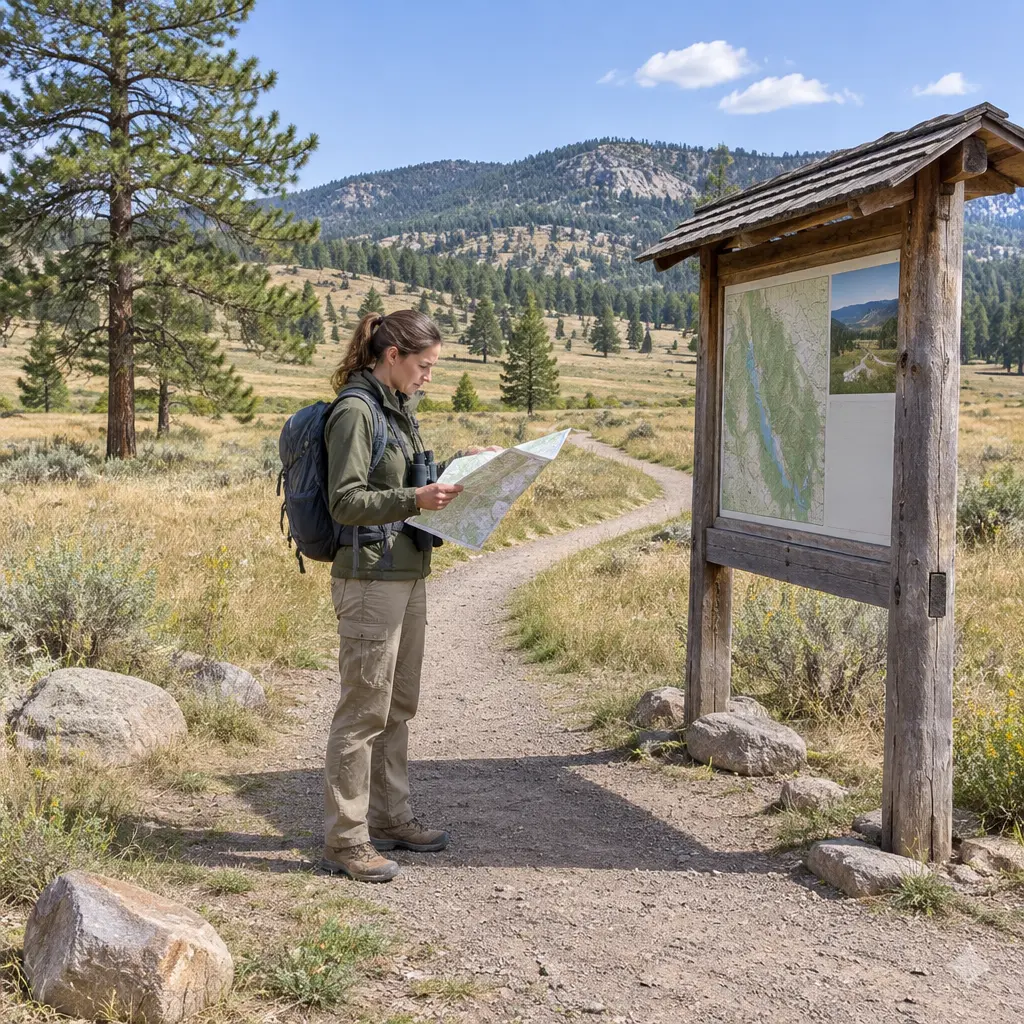
Wildlife behavior prediction uses observations and models to estimate what animals are likely to do next, where they may move, and how their behavior may change in response to people or environmental conditions. By combining tracking, field observations, and predictive analytics, researchers and wildlife managers can anticipate encounters rather than respond only after they occur. This is especially relevant as human development expands into wildlife habitat: the United Nations Environment Programme reports that human activities have significantly altered about 75% of the terrestrial environment. Prediction can support safer coexistence, conservation planning, and anticipatory framing—the practice of presenting timely information in ways that help people prepare for likely wildlife behavior without exaggerating certainty.
Predicting wildlife behavior: the behavior–prediction pairing
Wildlife behavior prediction is the estimation of future animal actions or locations from evidence such as past movement, habitat, season, weather, and human activity. There is no single universally adopted formal definition of the phrase. In ecology, however, prediction commonly means using a model fitted to observations to estimate outcomes for new situations; the quality of those estimates depends on the data, assumptions, and conditions under which the model is applied.
The pairing links a behavior—such as migration, foraging, resting, or avoiding people—with an anticipated outcome, such as a likely route, time window, or encounter probability. Its hyponyms include movement forecasting, migration timing, habitat-use prediction, human–wildlife encounter forecasting, and behavioral response prediction. These are related but not interchangeable: a model that predicts where an animal may travel does not necessarily establish why it will travel there.
The distinction matters because wildlife behavior is shaped by interacting causes. A prediction is most useful when it communicates its time horizon, geographic scope, uncertainty, and intended use. It should be treated as decision support—not as a guarantee about an individual animal.
Movement and habitat-use prediction
Movement prediction estimates an animal’s future position or path; habitat-use prediction estimates which places it is more likely to use. Researchers can build these estimates from GPS or satellite tags, camera traps, acoustic sensors, field surveys, and environmental data. The International Union for Conservation of Nature’s Red List assessments use information on species distribution, population, habitat, and threats to inform conservation status, illustrating how spatial evidence supports practical wildlife decisions.
A familiar example is forecasting seasonal movement to identify when animals may cross roads or enter agricultural areas. Such forecasts can help managers time monitoring or temporary safeguards. However, a predicted corridor describes a probability across places and time; it does not mean every tagged animal will follow the same route.
Behavioral response and encounter prediction
Behavioral response prediction estimates how animals may react to a stimulus, including noise, lighting, vehicles, visitors, or a change in food availability. Encounter prediction combines likely animal presence with the location and timing of human activity to estimate where contact may occur. These models can inform trail notices, seasonal closures, livestock protection, and public advisories.
The World Wide Fund for Nature’s Living Planet Report 2024 estimated an average 73% decline in monitored wildlife populations between 1970 and 2020. This figure is a population-abundance index across monitored vertebrate populations, not evidence that 73% of all individual wild animals have disappeared. It nevertheless underscores the conservation stakes: better anticipation can help reduce avoidable disturbance and conflict while supporting targeted protection.
Enabling anticipatory framing through wildlife forecasting
Anticipatory framing is the communication layer that turns a forecast into usable guidance before an event occurs. It explains what may happen, where and when it may happen, how confident the estimate is, and what people can do. The approach is most responsible when it distinguishes observed facts from model-based expectations and avoids implying that animals act with certainty or intent that the evidence cannot establish.
The bridge from prediction to framing is operational: ecological data produce a forecast; managers interpret it in context; and audiences receive guidance matched to their decisions. A forecast of seasonal bear activity, for example, might support reminders to secure food and maintain distance, while a predicted bird migration window could guide the timing of lighting adjustments or habitat protections.
Data sources and model inputs
Prediction depends on the quality and representativeness of its inputs. Animal-borne tracking devices provide movement records, while camera traps, acoustic monitoring, citizen-science observations, and field surveys can add information about presence and activity. Environmental inputs may include vegetation, terrain, temperature, rainfall, snow cover, and land use; human-activity data can help estimate exposure to roads, recreation, or development.
The International Bio-Logging Society describes biologging as the use of animal-attached devices to collect data on movement, behavior, physiology, and environmental conditions. These tools can reveal behavior that is difficult to observe directly, but they also have limitations: tags may cover only a small or non-random sample, devices can affect animals, and observations may be concentrated in accessible places or seasons.
Forecast uncertainty, validation, and limits
A reliable forecast is evaluated against observations that were not used to fit the model, and it is updated when conditions change. Researchers may assess whether predicted locations match later detections, whether probability estimates are calibrated, and whether errors differ across habitats, seasons, or animal groups. Performance in one region or year does not automatically transfer to another.
Uncertainty can arise from sparse tracking, changing climate, unusual disturbances, shifting land use, and animals adapting to human presence. Accordingly, public-facing messages should state a time window and confidence level where possible, use language such as “more likely” rather than “will,” and explain that local conditions can alter the forecast.
Ethics, privacy, and responsible communication
Wildlife prediction raises ethical questions about animal welfare, sensitive location data, and unintended consequences. Publishing precise locations of threatened species can increase disturbance or poaching risk; managers may therefore need to aggregate or delay location information. Data collection should also minimize harm and follow applicable permits, animal-care standards, and community agreements.
Framing should encourage proportionate action rather than fear. Clear advice can protect both people and animals, while sensational language or overly precise claims can prompt unsafe approaches, unnecessary persecution, or misplaced confidence. Including local and Indigenous knowledge, where appropriate and with consent, can improve interpretation and trust.
Applications and practical examples of anticipatory framing
Wildlife behavior prediction is useful when a forecast can change a decision in time to matter. Applications include road-risk planning, migration monitoring, protected-area visitor management, crop and livestock protection, and advance communication about seasonal wildlife activity. The appropriate intervention depends on species, place, evidence quality, and the potential costs of both false alarms and missed events.
Roads and wildlife crossings
Road-risk forecasts combine animal movement or collision records with traffic, habitat, and seasonal conditions to identify periods or locations where mitigation may be valuable. The U.S. Federal Highway Administration’s Wildlife Crossings Program supports measures such as crossing structures and associated fencing. Forecasts can help prioritize monitoring and inform seasonal warnings, but infrastructure decisions should be based on local evidence and evaluated after implementation.
Migration and protected-area management
Migration forecasts can help conservation teams schedule surveys, coordinate across jurisdictions, and prepare visitors for temporary access changes. Bird migration provides a clear illustration: the Cornell Lab of Ornithology’s eBird tools and related research use large-scale observations to support understanding of bird distributions and movement. Because migration timing responds to weather and other changing conditions, updates and uncertainty communication are essential.
Human–wildlife coexistence
In areas where wildlife may approach homes, farms, or recreation sites, forecasts can support advance steps such as securing attractants, protecting livestock, or choosing safer routes. The U.S. National Park Service advises visitors to maintain distance from wildlife and follow location-specific safety guidance. Predictive messages should complement such established precautions, not replace them or encourage people to seek out animals.
A useful accompanying visual would be a chart comparing forecast probability with observed detections across time, alongside a map showing uncertainty rather than a single definitive route. Such displays help audiences understand that predictions guide preparation but remain conditional.
Conclusion: using wildlife behavior prediction responsibly
Wildlife behavior prediction connects movement, habitat use, behavioral response, and encounter forecasting to decisions made before wildlife events occur. Anticipatory framing makes those estimates actionable by explaining likely outcomes, uncertainty, and practical steps. Tracking and environmental data can strengthen forecasts, while validation, privacy safeguards, ethical data collection, and careful communication limit their risks.
As habitat alteration and human–wildlife contact continue to shape conservation challenges, prediction can help communities prepare and managers target interventions. It should be used as an adaptable decision aid, not a promise of animal behavior. Conservation agencies, researchers, and local communities can advance this work by supporting transparent monitoring, evaluating interventions, and sharing timely, evidence-based guidance.
Sources: United Nations Environment Programme, Global Environment Outlook 6, https://www.unep.org/resources/global-environment-outlook-6; World Wide Fund for Nature, Living Planet Report 2024, https://livingplanet.panda.org/; International Union for Conservation of Nature, The IUCN Red List of Threatened Species, https://www.iucnredlist.org/; International Bio-Logging Society, About Bio-Logging, https://www.bio-logging.net/; U.S. Federal Highway Administration, Wildlife Crossings Program, https://highways.dot.gov/federal-lands/wildlife-crossings; Cornell Lab of Ornithology, eBird, https://ebird.org/; U.S. National Park Service, Wildlife Safety, https://www.nps.gov/subjects/watchingwildlife/safety.htm.

