
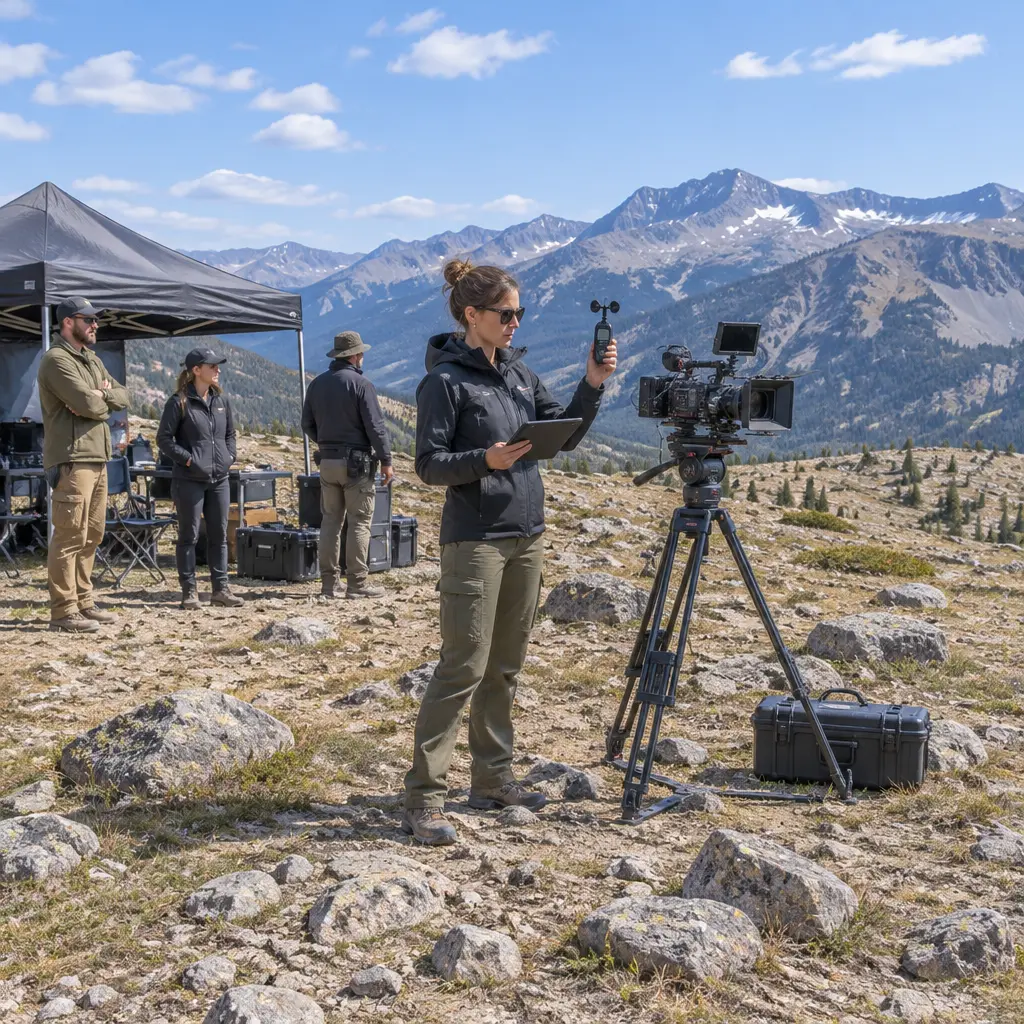
Extreme-environment filming protocols are the safety rules, decision-making systems, and practical controls used to protect cast and crew in conditions such as extreme heat or cold, high altitude, remote wilderness, underwater locations, and areas with hazardous weather. Their central principle is that people’s health and safety outrank shot lists and schedules. That priority is supported by occupational-safety guidance: the U.S. National Institute for Occupational Safety and Health (NIOSH) identifies heat stress as a preventable workplace hazard, while the Occupational Safety and Health Administration (OSHA) advises employers to plan for heat, train workers, provide water and rest, and respond quickly to symptoms. Effective protocols combine risk assessment, competent supervision, medical and evacuation planning, environmental monitoring, and a clear stop-work authority.
Prioritize safety through extreme-environment filming protocols
An extreme-environment filming protocol is a documented, location-specific system for identifying hazards, reducing exposure, responding to emergencies, and deciding when work must pause or end. It is not simply a list of precautions: it assigns responsibility, sets observable limits, and gives every worker a route to raise concerns without pressure to complete a shot.
The exact controls vary by environment. Heat protocols may address acclimatization, hydration, shade, work-rest cycles, and emergency response; cold-weather plans may cover wind chill, wet clothing, warming areas, and frostbite; altitude plans may include staged ascent and medical monitoring. Remote, underwater, and severe-weather productions need additional controls for communications, rescue, specialist supervision, and evacuation. The shared standard is straightforward: if conditions exceed the plan or a person shows signs of distress, the production pauses and reassesses.
Define the safety-first hierarchy for extreme-environment production
The safety-first hierarchy is the practical application of the occupational-safety principle that hazards should be eliminated or controlled before workers are exposed. NIOSH describes the hierarchy of controls as a preferred order: elimination, substitution, engineering controls, administrative controls, and personal protective equipment. For filming, this means first asking whether a shot can be created without exposing people to the hazard, then reducing remaining risks through equipment, procedures, and suitable protective gear.
The hierarchy helps distinguish robust risk reduction from measures that merely transfer responsibility to individuals. A jacket or respirator can be essential, but it does not replace avoiding an unnecessary exposure, stabilizing a set, or changing the schedule. The following categories show how that principle applies across distinct environments.
Heat, humidity, and wildfire smoke
Heat protocols manage the combined effects of air temperature, humidity, radiant heat, workload, clothing, and acclimatization. OSHA recommends providing cool drinking water, rest breaks, shaded or cool recovery areas, training, and a plan for medical emergencies. NIOSH’s heat-stress guidance also emphasizes gradual acclimatization for workers newly exposed to hot conditions; its recommended schedule builds exposure over roughly 7 to 14 days, adjusted for the worker’s prior heat experience and the conditions.
A production plan should identify who monitors conditions, how breaks are triggered, and how crews can report symptoms such as confusion, fainting, nausea, or loss of coordination. A wet-bulb globe temperature (WBGT) meter can support decisions because it incorporates heat, humidity, radiant heat, and air movement more effectively than air temperature alone. Smoke or dust can add respiratory hazards, so the plan may also require air-quality monitoring, exposure limits, suitable respiratory protection, and cancellation when controls cannot keep people safe.
Cold, wind, and wet conditions
Cold-weather protocols prevent hypothermia, frostbite, and cold-related loss of dexterity by controlling exposure to low temperatures, wind, and moisture. OSHA’s cold-stress guidance recommends planning for warm-up breaks, dry clothing, appropriate layers, and monitoring workers for symptoms. Wind chill matters because moving air increases heat loss, while wet garments can accelerate cooling and make a nominally manageable temperature dangerous.
For a shoot, controls can include heated shelters near the work area, spare dry gloves and socks, shorter outdoor takes, buddy checks, and a reliable route back to warmth. Cameras, batteries, lighting, and vehicles also behave differently in cold conditions; equipment failure should not prompt improvised exposure or rushed work. The assistant director and safety lead should be able to stop filming when weather changes invalidate the original risk assessment.
High altitude and strenuous terrain
Altitude protocols address reduced oxygen availability, exertion, cold, terrain, and the time required to reach medical care. The U.S. Centers for Disease Control and Prevention’s Yellow Book explains that acute mountain sickness can occur after ascent to high elevations, commonly beginning several hours after arrival; headache with nausea, dizziness, fatigue, or sleep disturbance may signal illness. Risk depends on elevation, rate of ascent, individual susceptibility, and exertion, so a production should not assume that fitness alone prevents altitude illness.
A location plan should set ascent and acclimatization arrangements, identify a medically qualified lead, define symptom reporting, and specify descent or evacuation triggers. Crew movement should be paced to the least acclimatized person, not the fastest member of the team. Filming should stop if someone develops concerning symptoms, especially confusion, severe breathlessness at rest, or impaired coordination, which can indicate a life-threatening emergency.
Remote locations and difficult access
Remote-location protocols manage the added risk created by distance from emergency services, limited communications, difficult access, and uncertain evacuation times. Before filming, producers should confirm the location, weather window, access routes, nearest appropriate medical facility, communications coverage, and available rescue resources. A satellite communicator or radio may be necessary where mobile service is unreliable, and the crew should know who raises the alarm and who coordinates the response.
The plan should also account for transport capacity, fuel, backup power, first-aid capability, and the possibility that weather will close an exit route. A real-world lesson comes from outdoor and expedition medicine: rescue time is part of the hazard, not an administrative detail. If a crew cannot communicate, stabilize an injured person, or evacuate within a credible timeframe, the production should change the location, reduce the scope, or postpone the work.
Underwater work and severe weather
Underwater filming requires a specialist dive plan rather than ordinary set-safety procedures. The plan should be led by qualified diving personnel and cover diver competence, equipment checks, depth and time limits, buddy or tender arrangements, communications, emergency oxygen, and rescue procedures. The U.S. Occupational Safety and Health Administration’s commercial-diving regulations set requirements for dive planning, equipment, medical support, and emergency procedures in covered workplaces; productions must determine which rules apply to their operation and jurisdiction.
Severe-weather protocols similarly depend on monitoring and predefined thresholds. Lightning, high winds, flooding, surf, and rapidly changing conditions can turn an otherwise controlled location into an uncontrolled one. The National Weather Service recommends seeking substantial shelter when thunderstorms threaten and remaining sheltered until the danger has passed; a production should identify suitable shelter in advance and avoid treating a brief lull as proof that conditions are safe. On water or exposed terrain, a forecast change can require an immediate move to a safer location.
Build risk assessment, authority, and emergency response into the plan
A written plan is useful only when it is specific to the actual location, people, equipment, and forecast. OSHA’s recommended practices for safety and health programs emphasize finding and assessing hazards, preventing and controlling them, training workers, and evaluating whether controls work. Productions can adapt that cycle through a documented assessment before the shoot and a short reassessment whenever conditions or tasks change.
A practical protocol should name accountable roles, set communication methods, and make stop-work authority explicit. The safety lead, medic, department heads, and production leadership need a shared understanding of who can halt work and how filming resumes after a pause. No one should need a supervisor’s permission to report an immediate danger.
- Identify hazards by task and location, including foreseeable weather changes, fatigue, transport, and equipment interaction.
- Choose controls using the hierarchy of controls, prioritizing avoidance and engineering measures over reliance on protective equipment alone.
- Set clear operating limits, monitoring intervals, break arrangements, and stop-work triggers.
- Confirm training, medical support, emergency communications, evacuation routes, and backup arrangements before filming.
- Reassess after any significant change, incident, near miss, or report of symptoms, and document the decision to resume or cancel.
The emergency plan should be actionable rather than aspirational. It needs a clear alarm method, a named incident lead, the location’s exact address or coordinates, access instructions, first-aid resources, and a realistic evacuation route. A tabletop review or short rehearsal can reveal problems before a real emergency, such as a radio dead zone or an ambulance route blocked by production vehicles.
Use production design and scheduling to reduce exposure
Safety-first production does not mean abandoning creative intent; it means solving creative problems without making unsafe exposure the default. A hazardous shot may be replaced with a controlled set, visual effects, a remote camera, a shorter take, a stand-in, or footage captured under safer conditions. The production should assess whether the same story point can be achieved with less risk before putting a performer or crew member in an extreme environment.
Scheduling is also a safety control. Productions can place demanding work during safer weather windows, reduce repeated takes, provide recovery time, and avoid rushing crews through transport or setup. Budgets should include qualified specialists, suitable protective equipment, communications, medical support, and contingency days; omitting these costs can create pressure to continue when conditions deteriorate.
Learn from incidents and measure protocol performance
A near miss, symptom report, weather-related delay, or equipment failure is useful evidence about whether a protocol works. Productions should record what happened, what conditions were present, how the response unfolded, and whether controls were followed or were impractical. The goal is to improve the system, not discourage reporting or assign blame for raising a concern.
Useful measures include completion of site assessments, crew training, equipment checks, response-drill findings, stop-work events, and corrective actions closed before the next shoot. These indicators do not prove that a location is safe, but they show whether the production is carrying out its plan and learning from experience. A chart could compare planned versus actual rest breaks, environmental readings, and work stoppages across shoot days to help identify patterns that call for schedule or control changes.
Conclusion: make safety the condition for filming
Extreme-environment filming protocols begin with a safety-first hierarchy and become effective through environment-specific controls, competent supervision, worker participation, and credible emergency planning. Heat, cold, altitude, remote access, underwater work, and severe weather each require distinct expertise, but all demand clear limits and a genuine ability to stop. Risk assessment, careful scheduling, safer creative alternatives, and learning from near misses help protect people without treating a shot list as more important than their well-being.
Before filming, producers should consult qualified safety and medical professionals, confirm applicable laws and industry requirements, and review the plan with the crew. If conditions exceed the plan or a person may be in danger, pause the work, reassess, and choose safety over the shot.
Sources: National Institute for Occupational Safety and Health, Hierarchy of Controls, https://www.cdc.gov/niosh/hierarchy-of-controls/about/index.html; National Institute for Occupational Safety and Health, Criteria for a Recommended Standard: Occupational Exposure to Heat and Hot Environments, https://www.cdc.gov/niosh/docs/2016-106/; Occupational Safety and Health Administration, Heat Exposure: Protecting Workers from the Effects of Heat, https://www.osha.gov/heat-exposure; Occupational Safety and Health Administration, Cold Stress, https://www.osha.gov/winter-weather/cold-stress; Centers for Disease Control and Prevention, CDC Yellow Book: High-Altitude Travel and Altitude Illness, https://www.cdc.gov/yellow-book/hcp/environmental-hazards-risks/high-altitude-travel-and-altitude-illness.html; Occupational Safety and Health Administration, Commercial Diving Operations, https://www.osha.gov/laws-regs/regulations/standardnumber/1910/1910.401; National Weather Service, Lightning Safety, https://www.weather.gov/safety/lightning; Occupational Safety and Health Administration, Recommended Practices for Safety and Health Programs, https://www.osha.gov/safety-management.

