
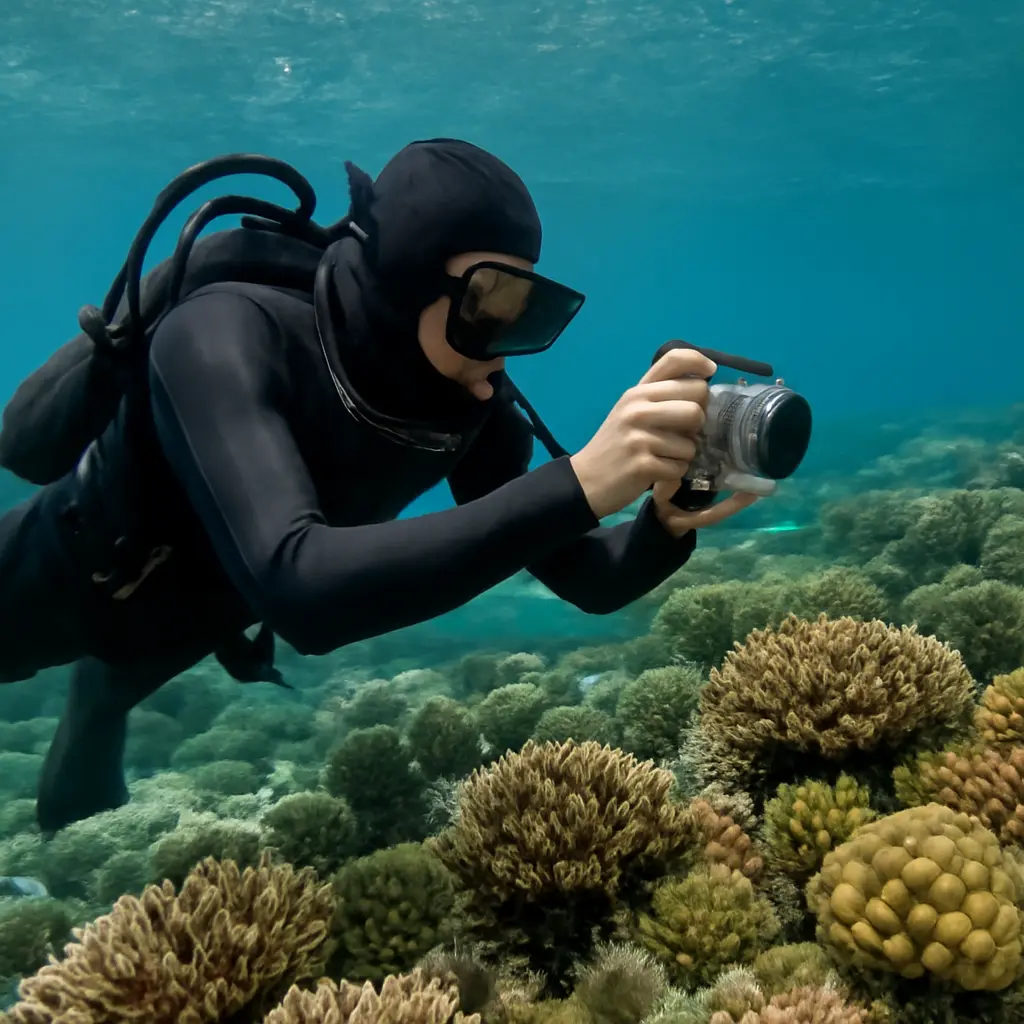
Underwater Cinematography: Light, Color, and Camera Science Behind Compelling Images
Underwater cinematography is the practice of planning and capturing moving images beneath the water’s surface, where light, color, visibility, pressure, and movement behave differently than they do in air. Its science is practical as well as aesthetic: water absorbs and scatters light, while a camera housing must protect equipment without compromising control or safety. These effects shape choices about lighting, lenses, exposure, stabilization, and dive planning. Understanding them helps explain why underwater images can look blue or hazy, how filmmakers restore color and contrast, and why production teams rely on specialized equipment and careful procedures.
How Light and Color Shape Underwater Cinematography
Underwater light is illumination modified by absorption and scattering as it travels through water. The National Oceanic and Atmospheric Administration (NOAA) explains that water absorbs different wavelengths at different rates: longer wavelengths, such as red, are lost relatively close to the surface, while blue light generally penetrates farther. This selective absorption is why a red object can appear dull or blue-green at depth unless it is illuminated with suitable artificial light.
The effect depends on more than depth. Water clarity, suspended particles, weather, sun angle, and the distance between camera, subject, and light all influence the result. Underwater cinematographers therefore treat light not simply as a camera setting, but as a limited resource to manage across the scene.
Absorption and the loss of color
Absorption occurs when water takes energy from light as it travels through the medium. Because red wavelengths are absorbed sooner than blue wavelengths, footage recorded farther from the surface commonly shifts toward cyan or blue. A white balance adjustment can improve the overall color cast, but it cannot recreate red information that never reached the sensor. Bringing a light source close to the subject is often more effective because it illuminates the scene before the color has traveled a long distance through water.
Scattering, visibility, and backscatter
Scattering redirects light when it encounters water molecules and suspended material, including sediment and plankton. In a shot, that can reduce contrast or create bright specks known as backscatter when artificial light reflects particles toward the lens. NOAA’s ocean optics resources distinguish absorption from scattering as separate processes that together shape underwater light. To reduce backscatter, crews often position lights away from the camera axis, use a close camera-to-subject distance, and avoid stirring the bottom.
Natural and artificial illumination
Natural light can create broad, atmospheric scenes near the surface, especially when the sun is high and the water is clear. Artificial lights provide more direct control over color and exposure, but their beams illuminate only a limited area and can reveal particles. The choice is a balance: ambient light can preserve a natural sense of scale, while close-mounted video lights or strobes can restore color to a nearby subject. A useful visual aid for planning is a depth-versus-color diagram showing how red, orange, and yellow wavelengths diminish before blue light.
How Equipment and Optics Support Underwater Cinematography
Underwater camera equipment is a coordinated system: the camera records the image, a pressure-resistant housing protects it, and ports, controls, lights, and support gear adapt it to the environment. The system must preserve optical quality while keeping the camera operable and safe. Equipment selection depends on depth, duration, water conditions, shot type, and the operator’s training.
Camera housings and pressure
A camera housing is a sealed enclosure designed to keep water away from the camera while transmitting light and allowing access to controls. Pressure increases with depth: NOAA describes the increase as roughly one atmosphere for every 10 meters of seawater, in addition to the pressure at the surface. That makes depth rating, seals, ports, and maintenance essential considerations. A housing’s published limit is not a substitute for inspection, correct assembly, and operating within the manufacturer’s specifications.
Ports, lenses, and the water-to-air boundary
A flat port is a transparent window in front of the lens; it is relatively simple but changes the apparent size and field of view of a subject because light bends at the water-to-air boundary. A dome port places an air space in front of a wide-angle lens and can help preserve a wider view, but it requires careful matching and focus. These optical effects influence lens choice, framing, and focus distance. Wide-angle lenses are common for large subjects and reef environments because getting closer can reduce the amount of water between the lens and subject.
Lighting, exposure, and white balance
Exposure is controlled through aperture, shutter speed, and sensor sensitivity, with each setting affecting the image in a different way. For moving subjects, shutter speed influences motion rendering; aperture affects depth of field; and higher sensitivity can help in dim conditions but may add image noise. White balance adjusts how the camera interprets color under the available light. These controls work together: a white balance setting cannot replace missing wavelengths, and increasing exposure cannot remove haze caused by scattering.
How Movement and Production Practice Shape Underwater Cinematography
Underwater cinematography also depends on movement, communication, and safety. Buoyancy, currents, limited visibility, equipment drag, and breathing gas all affect how a camera operator can frame a shot. The best technical setup is therefore one that supports the planned image without exceeding the team’s training, environmental limits, or available dive time.
Stabilization and camera movement
Stabilization is the control of unwanted camera motion. Underwater, small movements can come from fin kicks, breathing, current, or buoyancy changes. Operators may use careful trim, slow movement, compact rigs, or mechanical stabilization systems. However, a stabilizer adds bulk and drag, so it must be tested in the water and suited to the dive plan. In sensitive habitats, maintaining distance and avoiding contact are also part of responsible camera movement.
Dive planning, communication, and safety
A production dive needs a plan covering depth, time, gas supply, entry and exit, environmental conditions, equipment failure, and communication. The Professional Association of Diving Instructors (PADI) emphasizes that divers should follow training limits, use appropriate equipment, and plan dives with a buddy. Filming can distract a diver, so teams should assign clear roles, agree on signals, and avoid allowing a shot to take priority over breathing, buoyancy, or ascent procedures. Professional productions may also use a dedicated safety diver or underwater supervisor.
Case study: filming a reef responsibly
A reef sequence illustrates how these factors connect. The crew can first observe the site and select a subject that can be filmed without touching coral or stirring sediment. A wide-angle lens and close approach reduce the water column between camera and subject, while lights can be angled to limit backscatter. The operator then stabilizes position through buoyancy control, captures short planned takes, and maintains awareness of the buddy and remaining dive time. This approach improves image quality while reducing disturbance to the habitat.
Conclusion: The Science Behind Underwater Cinematography
Underwater cinematography brings optics, camera engineering, lighting, movement, and dive safety together. Absorption explains color loss; scattering explains haze and backscatter; housings and ports manage pressure and refraction; and careful lighting, exposure, and stabilization turn those constraints into deliberate visual choices. The broader lesson is that compelling underwater footage depends as much on understanding the environment as on owning sophisticated equipment. For further learning, consult NOAA’s ocean optics resources, review camera and housing manufacturers’ operating guidance, and pursue appropriate dive training before filming underwater.
Sources: National Oceanic and Atmospheric Administration, Ocean Optics: Light and Color in the Ocean, https://oceanservice.noaa.gov/education/tutorial_corals/coral02_zooxanthellae.html; National Oceanic and Atmospheric Administration, How Does Pressure Change in the Ocean?, https://oceanservice.noaa.gov/facts/pressure.html; Professional Association of Diving Instructors, Scuba Diving Safety, https://www.padi.com/safety; National Oceanic and Atmospheric Administration, Ocean Exploration: Light in the Ocean, https://oceanexplorer.noaa.gov/facts/light.html


